
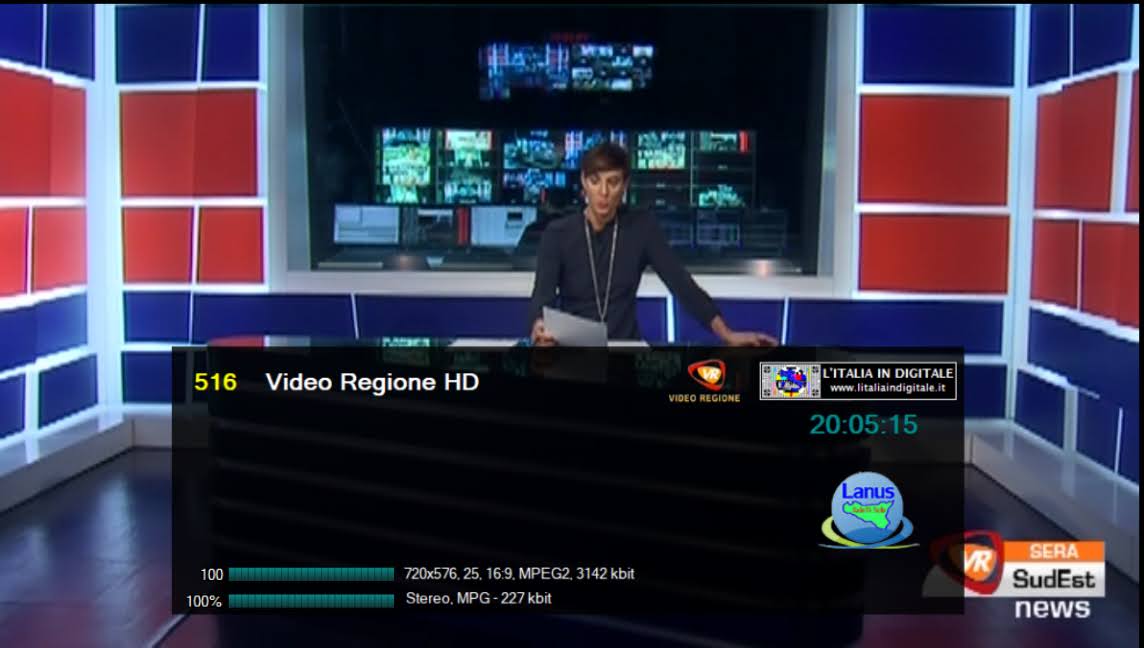

Video Regione is a popular Italian local tv channel, primarily serving viewers in Sicily and southern Italy. Known for its local report, cultural programs, entertainment, games, and community-focused material, it provides an authentic voice for local identity and daily life in the area. This article offers a complete, up-to-date, and distinctive guide to the channel, including its background, current satellite frequencies, easy tuning instructions, popular programs, and tips for stable reception.
Whether you are in Italy or part of the Italian diaspora in Europe, this guide will help you entry Video Regione with sharp and reliable signal clarity.
Brief Overview of the Channel
Video Regione is a private local broadcaster that focuses on Sicilian and southern Italian audiences. The channel delivers a balanced mix of local report bulletins, talk shows, cultural and traditional programs, music, games highlights, and entertainment. It plays an important role in promoting local events, traditions, and community issues. Video Regione broadcasts in Italian and is available in standard definition (SD) via satellite, making it easily accessible to viewers both locally and abroad through Free-to-Air (FTA) transmissions.
Frequencies of the Channel on All Satellites
Video Regione is mainly transmit on satellites serving Italy and the Mediterranean region. Most feeds are Free-to-Air (FTA). Here are the most reliable frequencies as of 2026:
- Eutelsat 5 West B at 5.0° West (Primary Position – Strong coverage for Italy and Southern Europe):
Frequency: 11676 MHz
orientation: Horizontal (H)
Symbol Rate: 35300
FEC: 2/3
encoding: DVB-S2 8PSK
clarity: MPEG-4 / SD
Encryption: Free-to-Air (FTA / sharp) – Often on Stream 4 (RAI Way Sicilia multiplex) - Eutelsat 9B at 9.0° East (Alternative Position):
Frequency: Varies (shared multiplex around 12000–12200 MHz range)
orientation: Vertical (V) or Horizontal (H)
clarity: SD
Encryption: Free-to-Air (FTA)
Note: The Eutelsat 5 West B at 5.0° West position is currently the most stable and widely used for Video Regione. Frequencies can occasionally change, so always verify the signal on your receiver.
Receiver software can also influence the way satellite channels are scanned, stored, and displayed. Installing compatible firmware updates may introduce improvements in system stability and channel management while helping the equipment remain suitable for newer broadcasting technologies.

Steps to Add the Channel to the Receiver
Adding Video Regione is straightforward since it is Free-to-Air. Follow these steps:
- antenna positioning: Point your satellite antenna accurately toward Eutelsat 5 West B at 5.0° West. A standard 60–90 cm Ku-band antenna is usually sufficient for good reception in Italy and surrounding areas.
- entry the Menu: Press “Menu” on your remote → go to Installation → Manual Scan or Add relay.
- Enter the Parameters:
- Frequency: 11676 MHz
- orientation: Horizontal (H)
- Symbol Rate: 35300
- FEC: 2/3
- encoding: DVB-S2 8PSK
- Scan: Perform a Single TP Scan (or check multistream if available). Look for Video Regione in the channel list.
- Save and Test: Save the channel to your favorites. Restart the receiver if needed and tune in. No subscription card is required.
Pro Tip: Use the receiver’s built-in signal clarity meter to fine-tune the antenna positioning for the strongest possible signal.
Programs or What the Channel Offers
Video Regione delivers a rich schedule focused on local and local material:
- Daily local report and current affairs from Sicily and southern Italy.
- Cultural programs showcasing traditions, festivals, and heritage.
- Entertainment shows, music, and variety programs.
- Sports coverage, especially local football and events.
- Talk shows and community discussions on local issues.
The channel is appreciated for its strong local identity, authentic Sicilian flavor, and commitment to serving its local audience.
Reasons Some Frequencies Disappear After a Software Update
A receiver software update can modify channel databases, satellite settings, scanning behavior, or stored configuration values. As a result, some previously saved frequencies may no longer appear even though the transmissions are still available.
- Check the satellite configuration after completing the update.
- Review the LNB and DiSEqC settings.
- Compare the stored frequency information with current data.
- Perform a manual scan for missing frequencies.
- Save the recovered channels after confirming stable reception.