

Modern digital broadcasting relies on accurate satellite frequencies to deliver stable television reception and uninterrupted access to a wide variety of channels.
This article discusses signal enhancement, receiver maintenance, and practical frequency management techniques.
Readers interested in satellite technology can browse Freq Zone for additional television broadcasting content.
The guide is designed to simplify satellite receiver configuration and improve viewing quality.
Nilesat is one of the most important communication satellites in the Middle East and North Africa (MENA) region. Since its launch in 1998, it has become the backbone of satellite airing in the region, offering a wide range of services including tv, radio, and internet. Known for its extensive coverage and reliability, Nilesat plays a crucial role in connecting millions of viewers, businesses, and institutions across the Arab world.
🚀 On the subject of Nilesat
Nilesat, operated by the Egyptian company Nilesat Satellite Communications, provides satellite airing services to a wide range of customers across the Middle East, North Africa, and parts of Europe. The satellite allows for the transmission of tv and radio signals, as well as data and internet services.
Nilesat’s fleet of satellites serves multiple purposes:
-
airing TV channels: Free-to-air and subscription-based channels.
-
Radio airing: National and local radio stations.
-
Data services: Internet entry and other telecommunication services.
-
Corporate communications: For businesses and institutions requiring dedicated communication lines.
With several satellites in orbit, including Nilesat 101, Nilesat 102, and the more recent Nilesat 201, the network continues to grow in capacity and facility offerings.
🌐 Nilesat’s Satellite Fleet
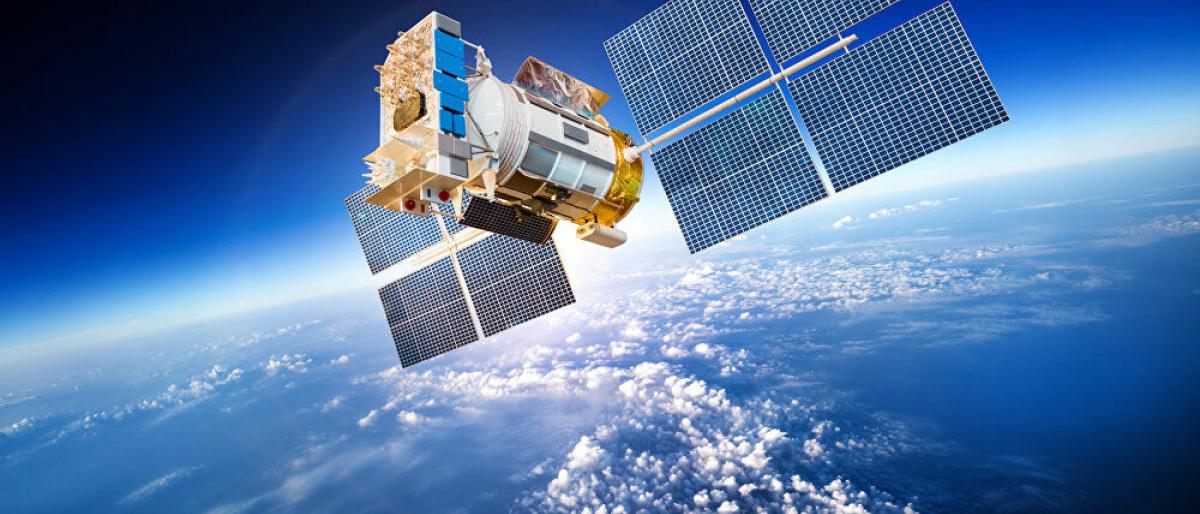
Nilesat operates a fleet of geostationary satellites positioned to serve the MENA region and beyond. These satellites are carefully positioned to provide the best possible signal coverage. Key satellites in the fleet include:
-
Nilesat 101
-
Nilesat 102
-
Nilesat 201
-
Nilesat 301 (upcoming)
These satellites are strategically placed to ensure seamless coverage for airing TV channels, radio stations, and other telecommunication services.
🛰️ Frequencies and Services on Nilesat
Nilesat operates across various frequency bands, including the C-band and Ku-band. These frequencies are used for various services:
-
C-band: Primarily used for long-range communication and airing, C-band offers a stable signal with less interference from weather conditions. It’s commonly used for tv airing.
-
Ku-band: This band is widely used for satellite TV airing and internet services. The Ku-band offers higher capacity and smaller antennas, making it ideal for both residential and commercial use.
Nilesat also provides a variety of frequency ranges that enable users to entry a broad array of channels and services. Users looking to set up satellite systems can find detailed guides to help them tune in to the correct frequencies.
📡 How to Receive Nilesat Signals
To entry Nilesat’s satellite signals, users need a satellite antenna and a receiver that supports the appropriate frequency bands (C-band or Ku-band).
The antenna must be correctly aligned with the satellite’s orbital position for optimal signal reception. Once the antenna is set up, users can enter the corresponding frequency in their receiver to entry the desired channels.
Common Nilesat Frequencies:
-
Nilesat 101/102 Frequency:
-
Frequency: 11.977 GHz (Vertical)
-
Symbol Rate: 27500
-
FEC: 3/4
-
-
Nilesat 201 Frequency:
-
Frequency: 12.515 GHz (Horizontal)
-
Symbol Rate: 27500
-
FEC: 3/4
-
Users can entry various TV channels, radio stations, and data services on these frequencies.
For easy entry to these frequencies and satellite configurations, FreqSatellite is a reliable system offering up-to-date information on Nilesat’s channels, frequencies, and settings.
Nilesat remains a vital asset for satellite communications and airing in the Arab world.
With its broad coverage, extensive services, and reliable signal clarity, it is a key player in delivering tv, radio, and internet services to millions of people in the MENA region.
Whether you’re looking to set up a satellite system for personal or commercial use, Nilesat continues to provide top-notch services. For more information on frequencies and satellite settings, FreqSatellite offers the most comprehensive and current satellite guides.
Difference Between Centralized and Individual Satellite Reception Systems
Individual reception systems normally provide a dedicated satellite connection for each household or receiver, while centralized systems distribute satellite signals through shared infrastructure. Each approach has different installation, maintenance, and expansion requirements.
- Determine the number of receivers that need access to satellite services.
- Choose individual equipment when a dedicated installation is more practical.
- Consider a centralized system for buildings requiring shared distribution.
- Check the required distribution equipment and cable infrastructure.
- Test signal quality at each receiving point after installation.